


Unveiled today in Paris, the Dyson CameraJet is billed as the world’s first toothbrush to be equipped with a built-in camera in order to help people perform a rudimentary task that most are pretty awful at… flossing their teeth.
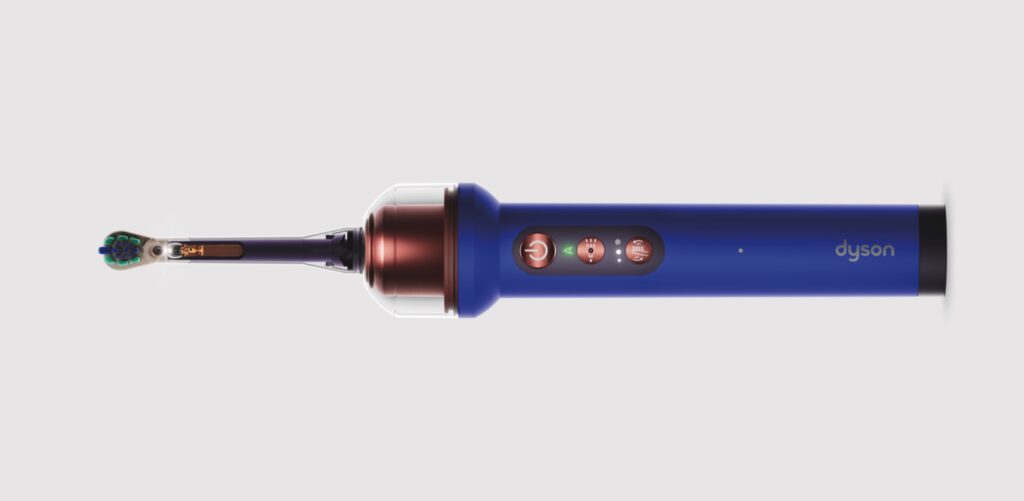
The big acronym you need to remember here is Gap Optical Targeting, Dyson’s name for a 100k-pixel macro lens camera that’s paired with a machine-learning model, one that’s been trained on 470,000 dental images.
Fire it up and it’ll scan your mouth 28 times a second, spotting the gaps between your teeth in real time, and then, within 100 milliseconds, fire a precision jet of mouth-rinse exactly where it’s needed. Think of it as autofocus, but for plaque.
That jet is where Dyson’s superskills with fluid dynamics kick in. Rather than the sharp ‘needle-type’ spray emitted by most water flossers – one that Dyson says usually punches through plaque without shifting it – CameraJet uses a broader conical spray that sweeps plaque away at lower pressure. This means that it will be gentler on our gums while getting on with the job.
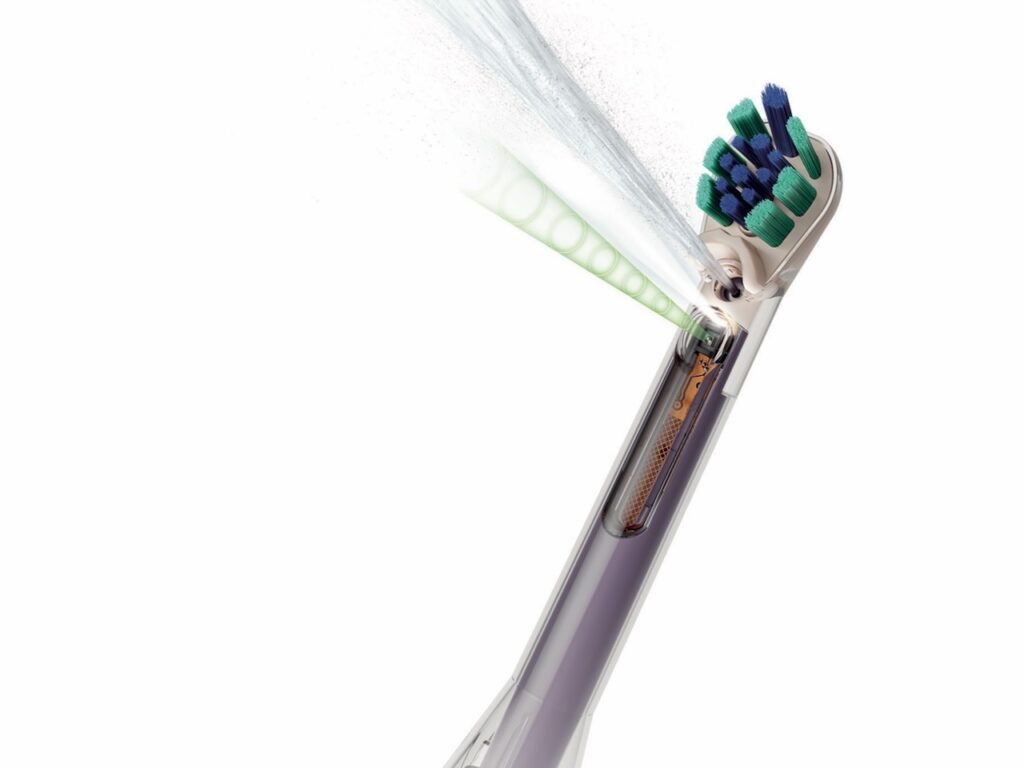
[Highly relevant factoid: after plaque has been on our teeth for 72 hours, it hardens and becomes tartar, which only an expensive visit to the dental hygienist will remove.]
Powering that rinsing is what Dyson dubs an ‘anti-gravity tank’, a 12.5ml reservoir with a diaphragm pump designed to keep delivering fluid, whatever angle you’re holding the brush, including on its side while you scrub your back molars. When it’s not in your mouth, it’s parked on a charging dock that also refills the tank in three seconds.
The brush head itself combines two bristle types – firmer ones for stain removal, softer ones along the gumline – oscillating in a ‘variable sonic’ pattern that Dyson engineered specifically to stop bristles stalling against tooth surfaces. Apparently, this issue was discovered while the engineers were watching slow-motion footage of rival electric brushes doing their thing.
Dyson claims its brush head removes up to 69% more plaque than premium rivals in hard-to-reach spots. Each head carries an RFID chip that tracks usage and nudges you when it’s time for a replacement (£24.99 for a pack of two).

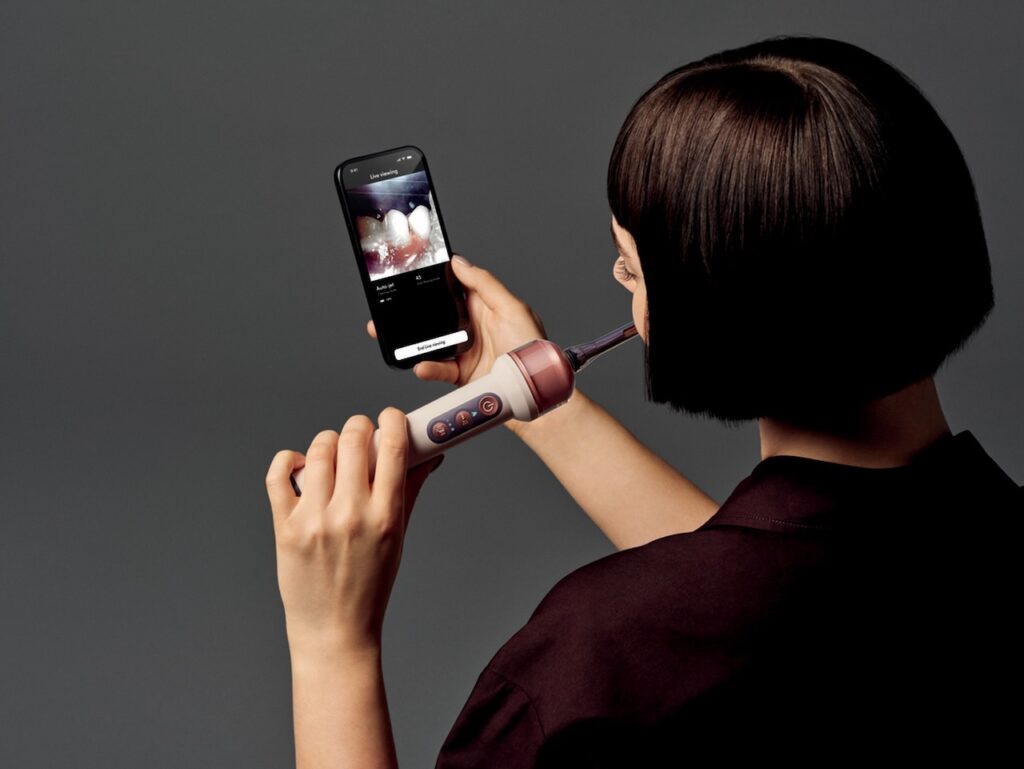
There’s a software layer, too: CameraJet connects over Wi-Fi and Bluetooth to the MyDyson app, letting users watch a live feed from the in-mouth camera, get coverage maps of where they’re missing spots, and track technique over time. Dyson says footage of our mouths isn’t recorded or stored anywhere.
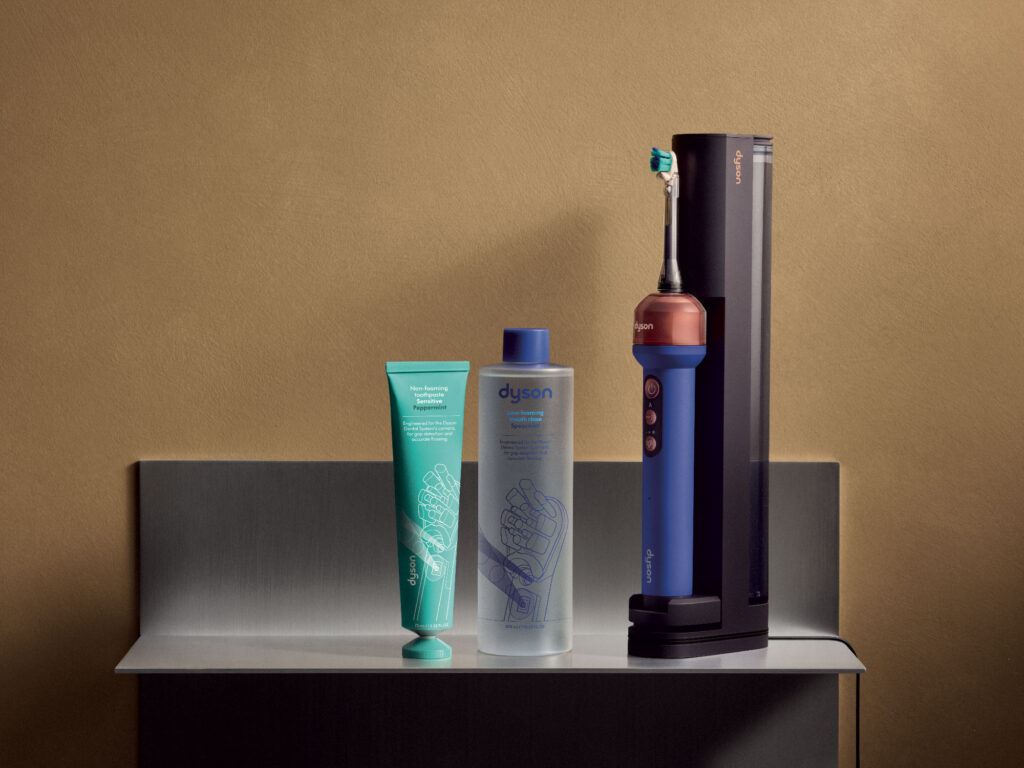
Collectively, all the above components comprise the Dyson Dental System, which bundles the brush, dock, travel case, and Dyson’s own SLS-free, non-foaming toothpaste and mouth-rinse, the latter items being specially formulated so they don’t obscure the camera’s view with bubbles.
When it comes to the cost of consumables, the mouthwash (available in ginger mint or spearmint) will sell at £8.49 for a 400ml bottle, with toothpaste (available in spearmint, ginger mint or peppermint flavours) priced at £9.99 a tube. Naturally, you’ll be able to get everything you need on a discounted subscription plan, direct from Dyson.
On the sustainability front, it’s good to see that the battery should last at least five years and will be user replaceable. The toothbrush itself will have a two-year warranty.
When can you treat your mouth to this radical new cleaning experience? Well, today, actually…
The Dyson CameraJet is available now through Dyson Demo Stores and select retailers, priced at £419.99, in either Ceramic Ultra Blue or Ceramic Pink.
