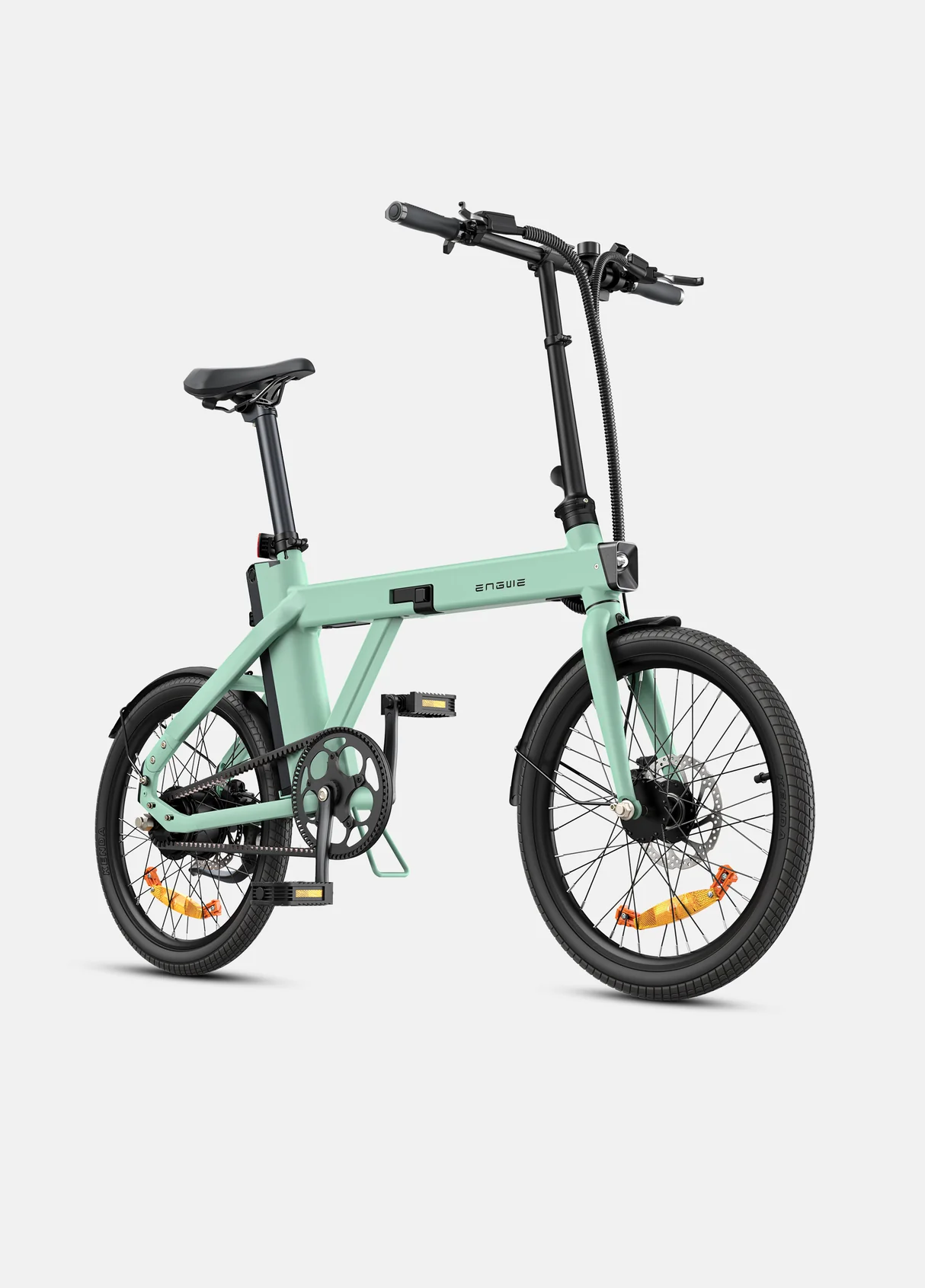
The P20 is ideal for short commutes, with a modest 250W motor that drives the rear hub via a carbon-impregnated belt, plus 160mm disc brakes, a sturdy (though short) rear pannier rack and an integrated brake light system, along with push-button indicators and an onboard computer display.
The folding mechanism is neat and easy to operate, but the awkward folded position of the handlebar means the P20 doesn’t approach the compact folding skills of a Brompton. At 18kg, it’s light enough to lift onto a train or into a large car boot, though.
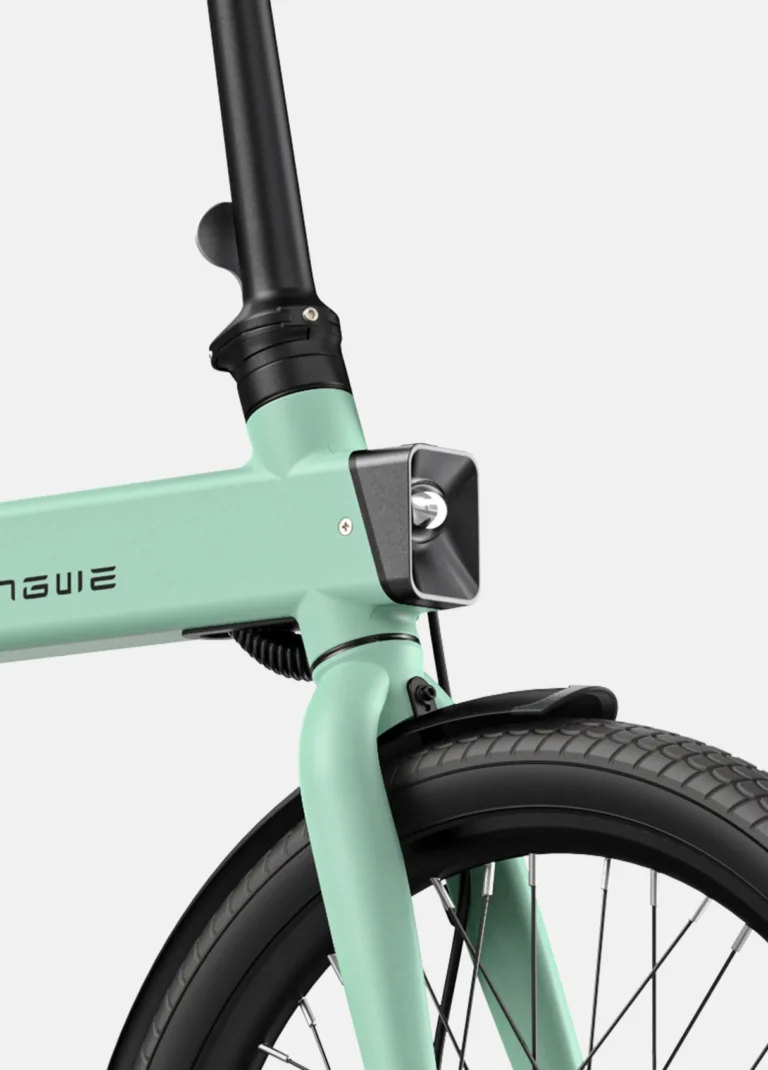
The pedals are a bit small (though easily replaced) and there’s no way of knowing when the indicators are on, which could be dangerous. The headlight doesn’t cast a wide or long enough spread for safe night-time riding, while the rear brake lights are too low on the frame to be seen easily by motorists.
Nevertheless, the single-gear P20 provides a faff-free ride. You pick your battery assistance level (either one, two or three), unlock the thumb-operated accelerator and away you go. Torque-sensing means you have to be actively pedalling to get assistance, but I found it could always help me up fairly steep inclines.
Braking was efficient, and I covered 50 to 55 miles before needing to recharge, which took between four and five hours, an excellent charge time for a budget e-bike. And though there’s no suspension, a nicely-upholstered saddle and 20-inch road tyres help ensure a pretty compliant ride on smoother tarmac.
It’s a little ungainly when fully folded – compact is a bit of a misnomer – but the sturdy build quality, great battery life and ultra-keen price make up for it.